
Content warning: this article discusses childhood exposure to trauma, psychological injury and fatalities.
Article pending update to reflect latest guidance:
Executive summary of the main changes since the 2021 Guidelines | Resuscitation Council UK
Recently there has been a focus on teaching CPR to children. Studies have found that children as young as 9-years-old can learn the theory of the technique (Jones et al., 2007). Across the UK, there are efforts to embed CPR awareness in the primary school curriculum and campaigns encouraging young learners to access First Aid training e.g. there are 2,000 schools signed up for Restart a Heart Live on 1st October.
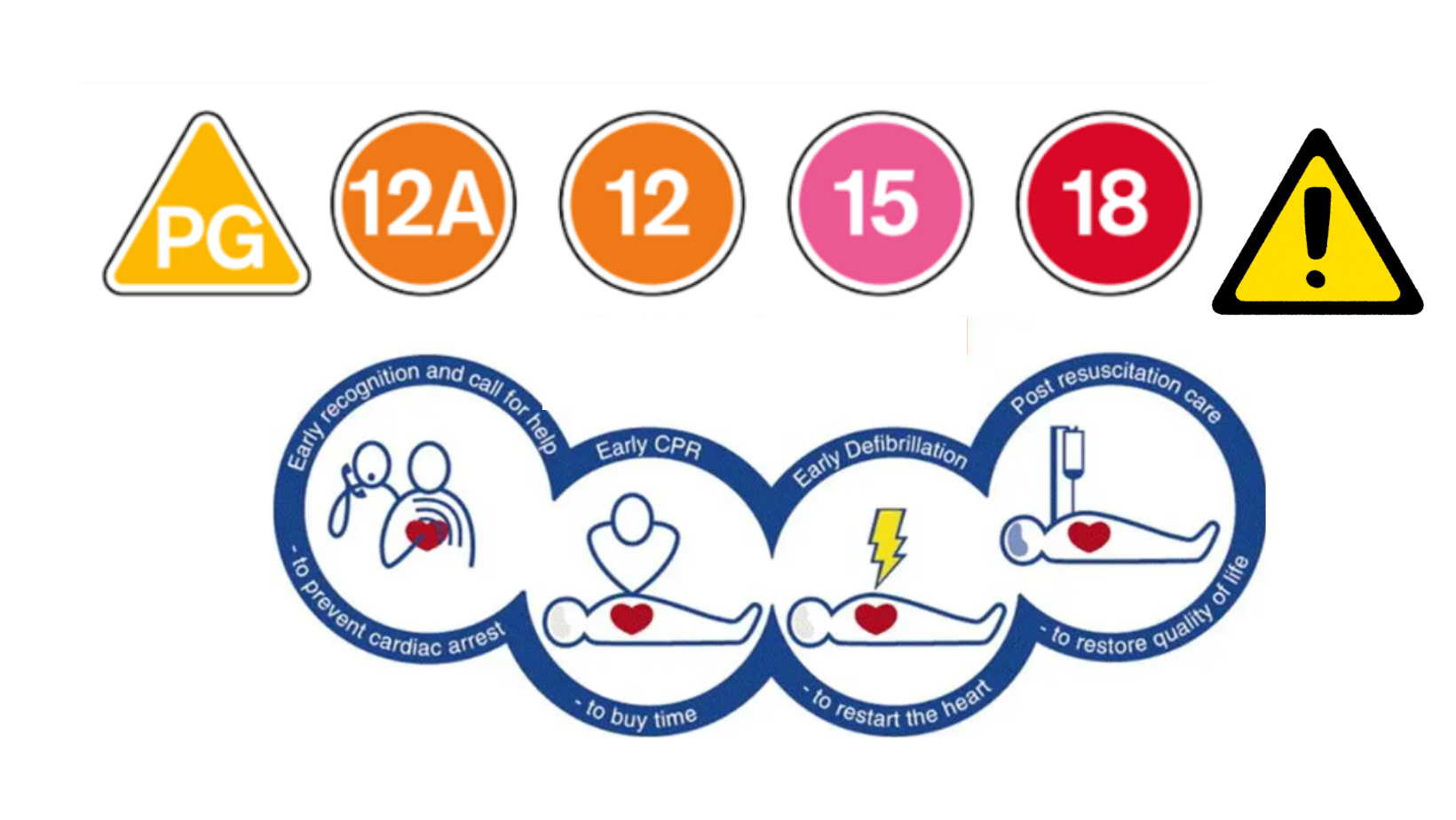
In film and TV, the general consensus is that scenes containing distress, implications of death, or medical trauma should have a 15 rating, suitable only for 15 years and over (Age Ratings and Film Classification | BBFC, 2025). First Aid training materials for schools have been adapted for different age-groups, for example, Primary School students will not be exposed to graphic detail or scenes of distress, and instead can learn the CPR song.

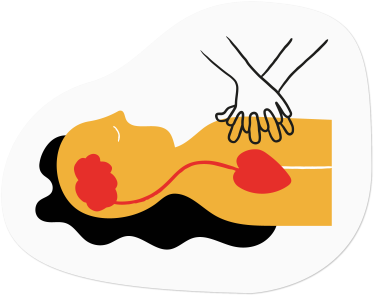
The British Red Cross have adapted First Aid Primary School training videos so that the young person is helping an adult to deliver First Aid, rather than being in a position of responsibility.
St. John Ambulance provide a range of Youth Programs where children can learn and practice First Aid at an age appropriate level.
There are many benefits of starting First Aid training from a young age:
- It can help to foster a culture where helping others is normalised, reducing the risk of ‘the bystander effect’ (where people are less likely to help someone in need if others are present).
- Children can cascade their knowledge and skills to others (Starling et al., 2023); courses for young learners often have a focus on sharing knowledge. This may inspire their families to learn First Aid.
There is a strong argument to provide children the skills to help in the event of them being the sole witness witness to an emergency.
Whilst no one wants children to be exposed to traumatic events, exposure is sometimes unavoidable, and the question then is not whether parents want children to be exposed but whether they want children to be capable of helping should the worst happen.
However, CPR research by Jones et al. (2007) found that no children aged 9 to 10 years were strong enough to be able to compress the chest of an adult to an adequate depth and other physical limitations.

Given the focus on sharing skills, children may be able to ‘advise an adult’ during an emergency (Jones et al., 2007). It is important to remember that CPR is just one link of the chain of survival for unresponsive, not breathing casualties. Deakin (2018) argues that ‘not all links are equal’, highlighting first the importance of early recognition and calling for help. Tasks such as finding adults to help, knowing where the nearest AED is and knowing how and when to call an ambulance may be more suitable for younger helpers when there are adults who can provide CPR.

Jones et al. 2007 found that children aged 13-14 performed compressions as well as adults in comparable studies and concluded that ‘current recommendations to teach full, single rescuer cardiopulmonary resuscitation at age 13-14 are therefore appropriate’. However this does not take into account the potential psychological impacts of performing CPR.
- What impacts can witnessing a distressing emergency have on young minds? Adverse experiences at a young age can risk psychological injuries which have long lasting negative impacts on an individual’s wellbeing.
- If children are involved in providing First Aid, what tailored follow-up support can they access? There is increasing recognition that co-survivors of cardiac arrest may struggle with their mental health and need support, especially where there has been fatality or the casualty is a family member.
King’s College London (KCL) researchers are conducting the Child CPR Study to investigate the experiences and support needs of young people (aged 11-23) who have performed cardiopulmonary resuscitation (CPR) during real-life cardiac arrests. The study aims to inform improvements in CPR training and support for young bystanders, recognizing it as an under-researched area.
There is no research exploring children and young people’s experiences of being a [First Aider]. Exposure to traumatic events during childhood can have lifelong impacts, but effective support afterwards can decrease psychological harm, resulting in long-term benefits and a reduction in healthcare service use.
The British Red Cross offer free curriculum-linked teaching resources and training workshops for teachers and youth workers.
Teachers should be aware that some children may have already had real life exposure to the potentially triggering topics covered on a First Aid course. The Adverse Childhood Experience Hub Wales provides more information about adversities in childhood and how to impliment a trauma-informed approach to education, including a Free 1h course to become ‘Trauma Aware’.
Signposts
For resources on child recovery after trauma, see Post-traumatic Parenting.
For support and resources for First Aiders, please see Post Traumatic Wellbeing.
Sources
Age ratings and film classification | BBFC. (2025). Retrieved July 19, 2025, from https://www.bbfc.co.uk/about-classification
Deakin, C. D. (2018). The chain of survival: Not all links are equal. Resuscitation, 126, 80–82. https://doi.org/10.1016/j.resuscitation.2018.02.012
Jones, I., Whitfield, R., Colquhoun, M., Chamberlain, D., Vetter, N., & Newcombe, R. (2007). At what age can schoolchildren provide effective chest compressions? An observational study from the Heartstart UK schools training programme. BMJ : British Medical Journal, 334(7605), 1201. https://doi.org/10.1136/BMJ.39167.459028.DE
Starling, J., Hardyman, W., & Goodfellow, S. (2023). 265 Empowering teachers in Wales to deliver CPR in the primary school curriculum. Resuscitation, 192. https://doi.org/10.1016/s0300-9572(23)00588-9
Leave a Reply